


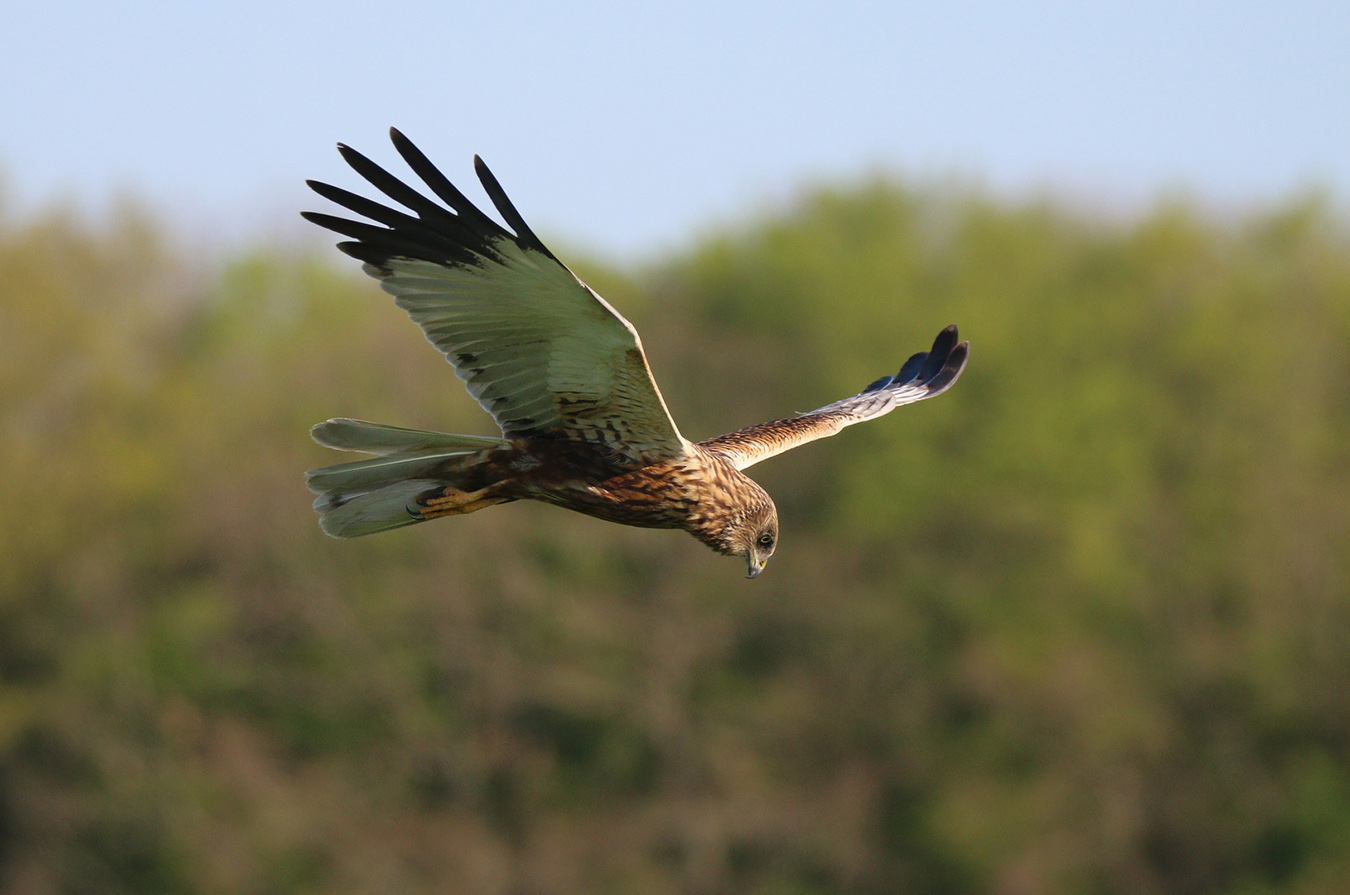
In the spring and summer, as temperatures slowly warm up and we get more sunny days, we all look forward to pulling on the hiking boots once again and getting some lovely fresh air into our lungs. As well as the gorgeous countryside we have to explore in the Cotswolds with all manner of wildlife, we are also lucky enough to get sightings of beautiful birds of prey in the wild on our guided walking tours and self-guided walking tours in the area.
Cotswold Birds of Prey to Look Out For
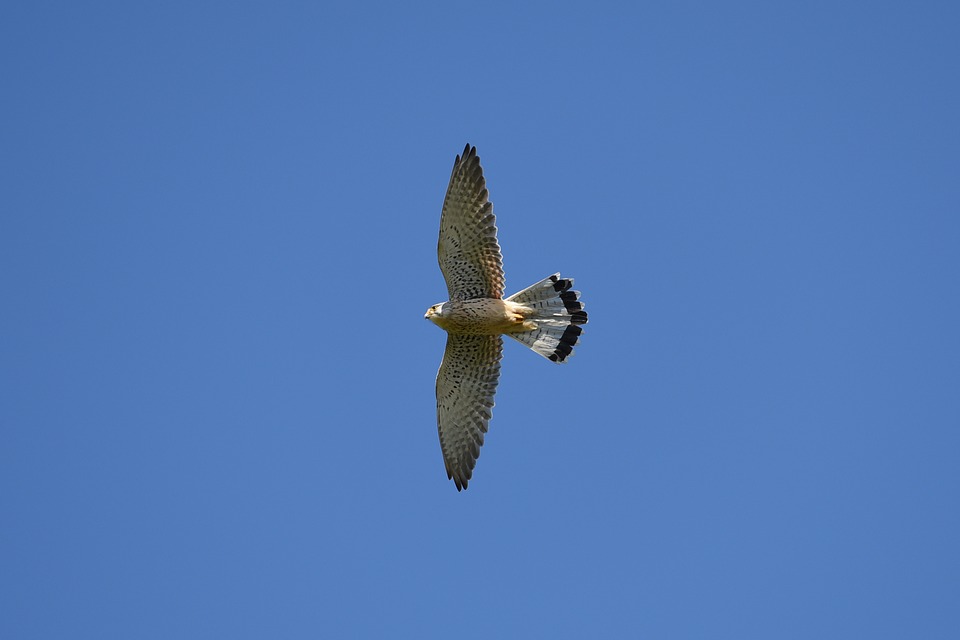
1. Kestrel
Kestrels are one of the best-known falcons in the UK and are often seen hovering over motorways or road verges where they are usually looking for mice or voles in the long grass. You can identify a Kestrel because they have long, pointed wings and a long tail. The male Kestrel is smaller than the female, and they have a greyish blue head with light brown backs and breasts, while the female Kestrel is generally brown with mottled black feathers. Kestrels are amazing at hovering and are one of the best birds of prey at this skill. They fan their long tails out for balance and flap their wings very fast in order to stay airborne.
2. Sparrowhawk
Sparrowhawks were almost extinct in the UK because of pesticides that caused their eggs to break before they could hatch, but after successful conservation work, we now have as many as 40 thousand pairs breeding in Britain, which is wonderful news. Sparrowhawks are adapted to hunting in woodland and like to eat birds ranging from blue-tit size to pigeons. Sparrowhawks have short, blunted wings which allow them to fly between trees and small spaces at speed. Their tails are long and squared at the ends, which gives them the skill and agility to manoeuvre through tight corners.
Males are known as muskets and stand about the size of a thrush with a reddish breast, white bars, and a slate grey back. The females are far bigger than males at about the size of a wood pigeon, and are grey and white in colour, with black bars down their breasts.
3. Red Kite
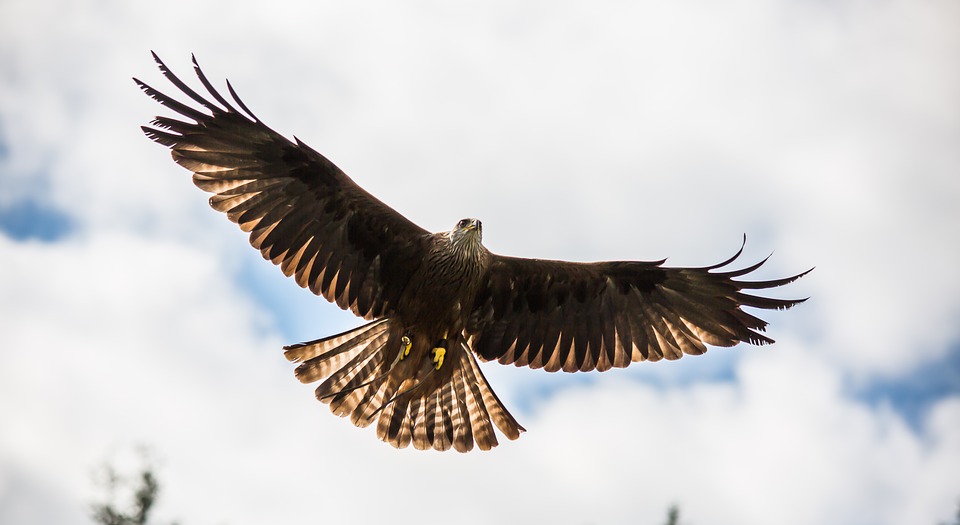
Red kites have also been saved from the brink of extinction with the massive help of reintroduction projects all over the country. Red Kites are fairly unmistakable with deep red/orange colours and distinctive forked tails. They are communal birds and like to gather together in great numbers to scavenge for food. Look out for them circling with their long, broad-fingered wings in a V-shape.
Red kites can often be found following farmers who are ploughing their fields as they like to eat carrion and love the earthworms that are exposed during ploughing.
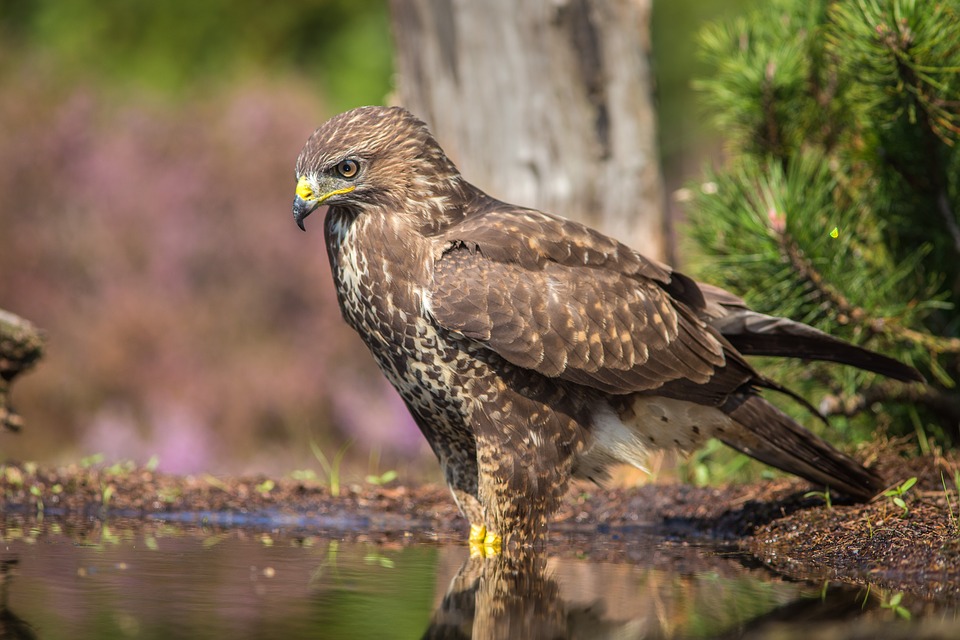
4. Common Buzzard
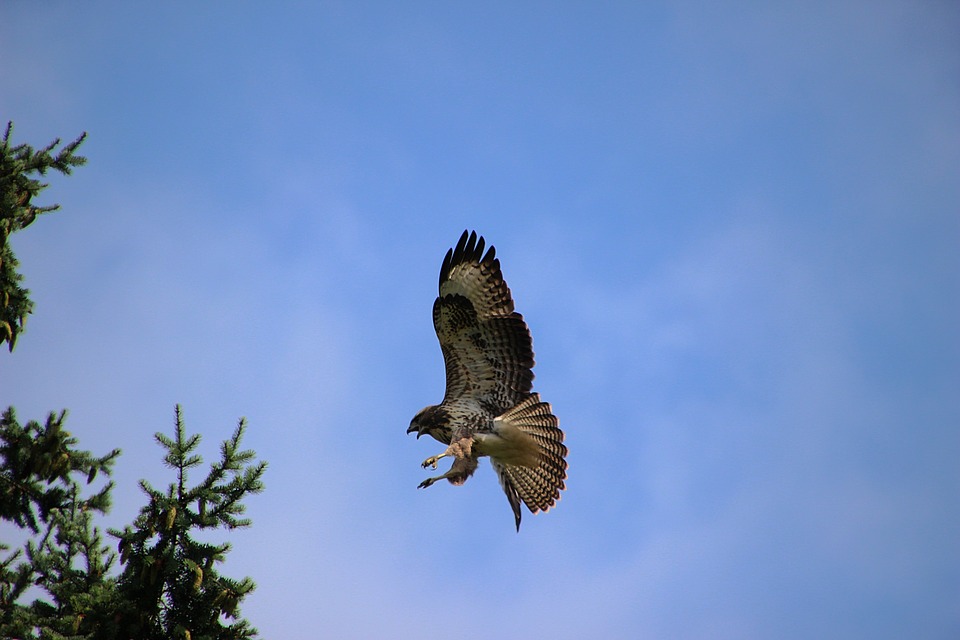
Twenty years ago, Buzzards were critically endangered but have thankfully bounced back from the brink of extinction and can be found all over the UK. Their tails are wedge-shaped, and their wings are long and broad, which allows them to use thermal columns to gain height very easily. They like to soar high in the sky whilst looking for a meal on the ground with their superb eyesight, before diving down with folded wings.
These birds are mainly scavengers and will readily eat carrion. They hunt small mammals like rabbits and are even very happy eating earthworms. Whilst mainly brown, they do have light patches on the underside of their wings, which can help to distinguish them from ravens or large crows if you only have a glance. A good way to spot buzzards is to listen for their distinctive ‘mew’ call.
Cotswold Bird Attractions
If you don’t manage to spot any birds of prey whilst out and about walking, then there are a couple of places to visit where you will be guaranteed a sighting.
Cotswold Falconry Centre
The Cotswold Falconry Centre near Moreton-in-Marsh is a great place to visit with the aim of giving people a greater knowledge of birds of prey and an understanding of the ancient art of falconry. There are over 130 birds of 60 different species, and flying displays take place daily. You can learn about how the different species hunt and catch their prey, and the skill sets they possess to make them successful predators.
Between the displays, take a walk around the breeding aviaries, some of which may be successfully breeding right in front of your eyes. The centre is also home to some birds that are critically endangered in the wild.
Our Best of the Cotswolds Walking Tour, Heart of the Cotswolds Walking Tour, Grand Tour of the Cotswolds on Foot, Cotswold Circle Walking Tour, and Cotswolds Interlude Short Break Walking Tour all pass through Moreton-in-Marsh, a stone’s throw from the falconry centre.
Walks With Hawks
Walks with Hawks is another great place to visit in the area, based in Cheltenham. You’ll have the rare opportunity to handle and fly a variety of birds of prey. The Hawk Walks are the perfect introduction for adults and children to experience the art of falconry, and as you walk in a small group, you’ll have the chance to spot not only Hawks but also deer, foxes and other native birds of prey.
Our South Cotswold Ring Walking Tour, Grand Tour of the Cotswolds on Foot, Cotswold Circle Walking Tour, and Guided Tour of the Cotswolds all stop in Cheltenham, making a visit to Walks with Hawks an easy addition to your itinerary.
Whether you’re quietly watching a kestrel hover above open fields or feeling the rush of wind from a hawk’s wings during a falconry experience, spotting birds of prey in the Cotswolds adds an unforgettable thrill to your time in the countryside. With so many opportunities to witness these magnificent hunters, both in the wild and up close, it’s just one more reason to lace up your boots and explore this remarkable region on foot.